Quest for Business
Managing a fleet of VR headsets at scale is a fundamentally different problem than managing phones or laptops. When Meta decided to build a first-party solution, there was nothing to start from. I was the sole designer on Device Manager, now part of Meta Horizon Managed Services, working with 10+ engineers and 1 PM to give IT admins centralized control over their Quest fleets: provisioning, presets, remote wipe, and conflict resolution, with groundwork laid for third-party MDM partners like ArborXR and Microsoft Intune.
The core design problem
The core design problem
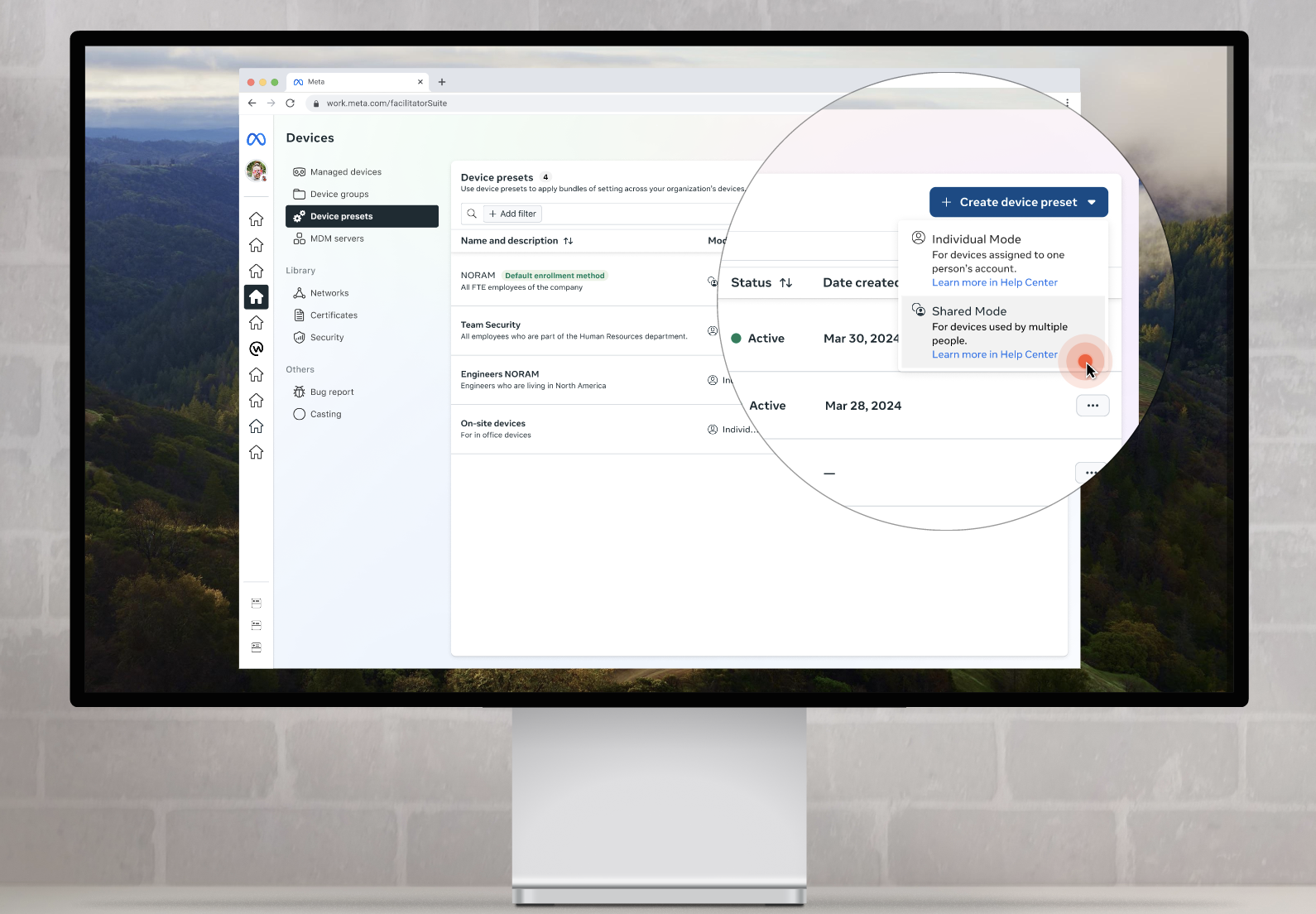
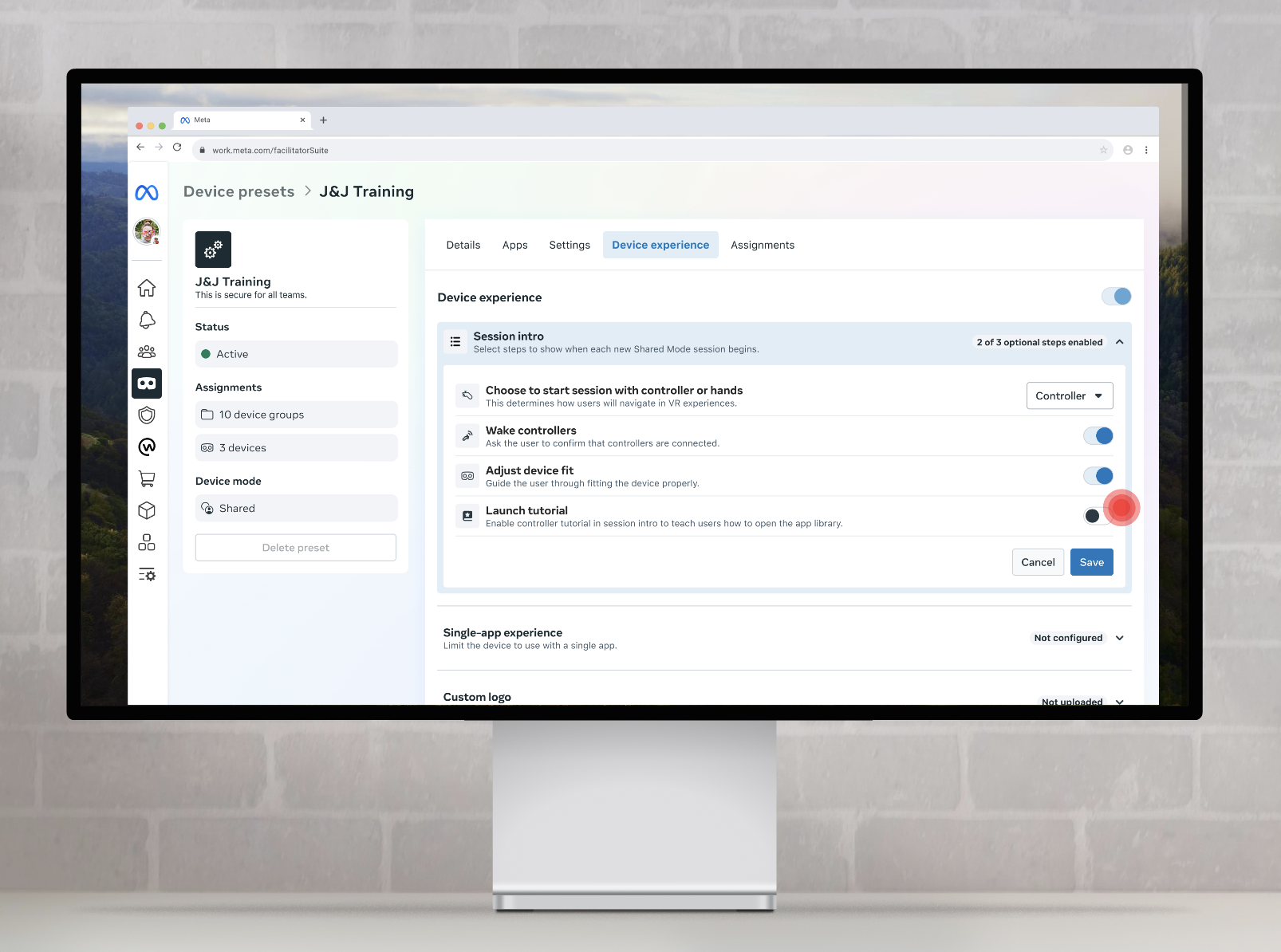
The hardest problem was presets. A small business deploying five headsets has completely different needs than an enterprise rolling out hundreds across multiple locations. I led user research across enterprise types and sizes to map what each segment actually needed, and that research directly shaped a preset system that gave admins a relevant starting point without building from scratch.
Conflict resolution
Conflict resolution
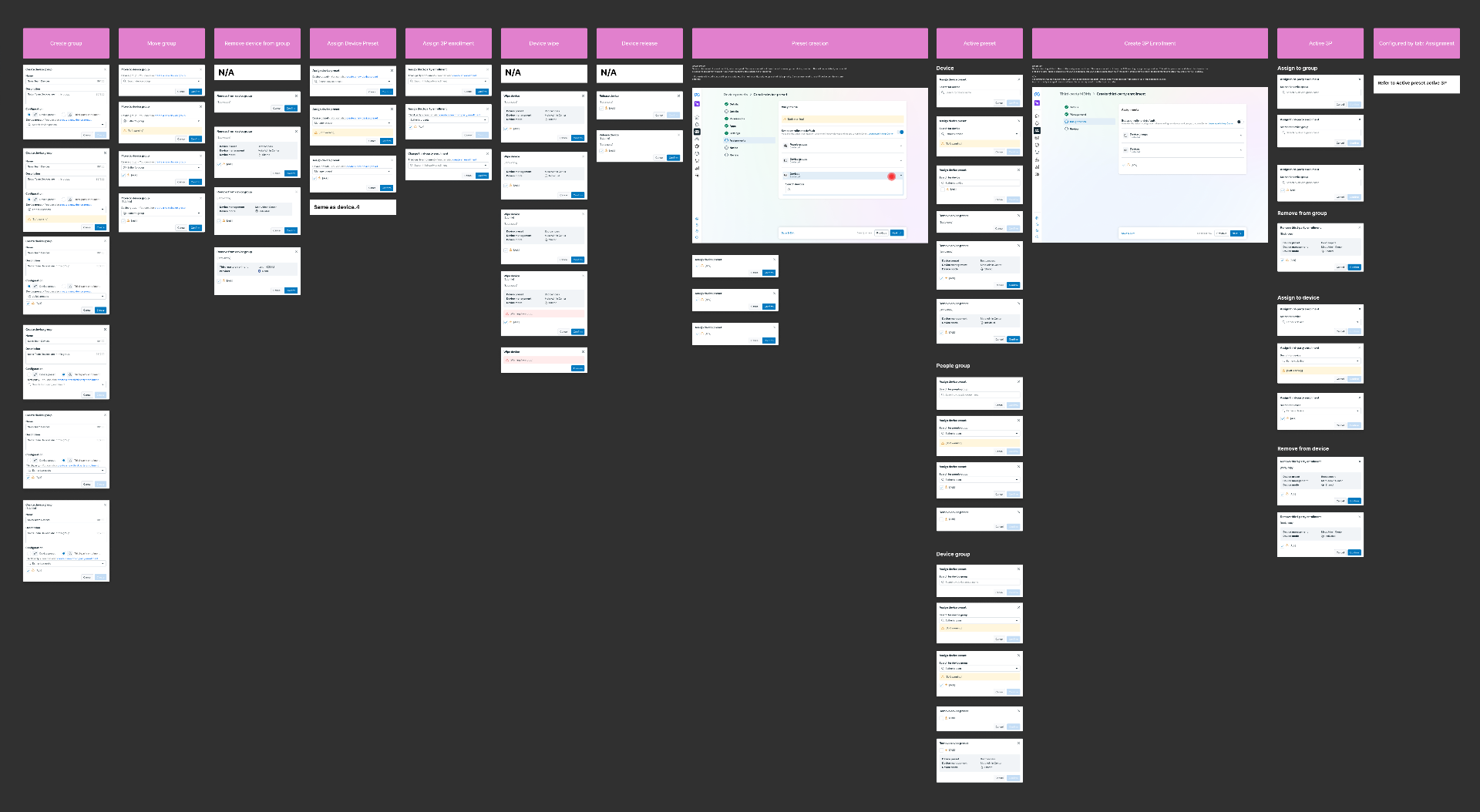
Another significant design challenge was conflict resolution. Certain device management actions carry serious consequences — wiping a device, for example, can run into privacy concerns or data complications that need to be surfaced before the admin proceeds. The design solution was a system of contextual blocking modals and warnings that appeared at the right moment depending on the specific situation. With dozens of permutations to account for across different actions, device states, and enterprise contexts, mapping and designing this system required careful logic and close collaboration with engineering.
Features
Features
Core surfaces across the Device Manager admin experience, from bulk provisioning through day-to-day fleet operations.
Outcome
During the development period, the product helped land significant enterprise deals including Walmart and Staples, a direct signal that the tool was credible and compelling enough for large-scale deployment.