World Desktop Editor
Horizon Worlds Editor is Meta's own game engine built specifically for creating Horizon Worlds experiences, similar to Unity but native to Meta's ecosystem. When the editor launched, there was nothing to help new users get started. No onboarding, no guidance, no education layer of any kind. For a tool this complex, that was a real barrier especially for the hobbyist creators who made up the primary audience. I was the sole product designer leading the education piece across the editor. This case study focuses on the centerpiece of that work: the NUX, a zero to one interactive walkthrough that shipped to 100% of users.
The NUX
The challenge
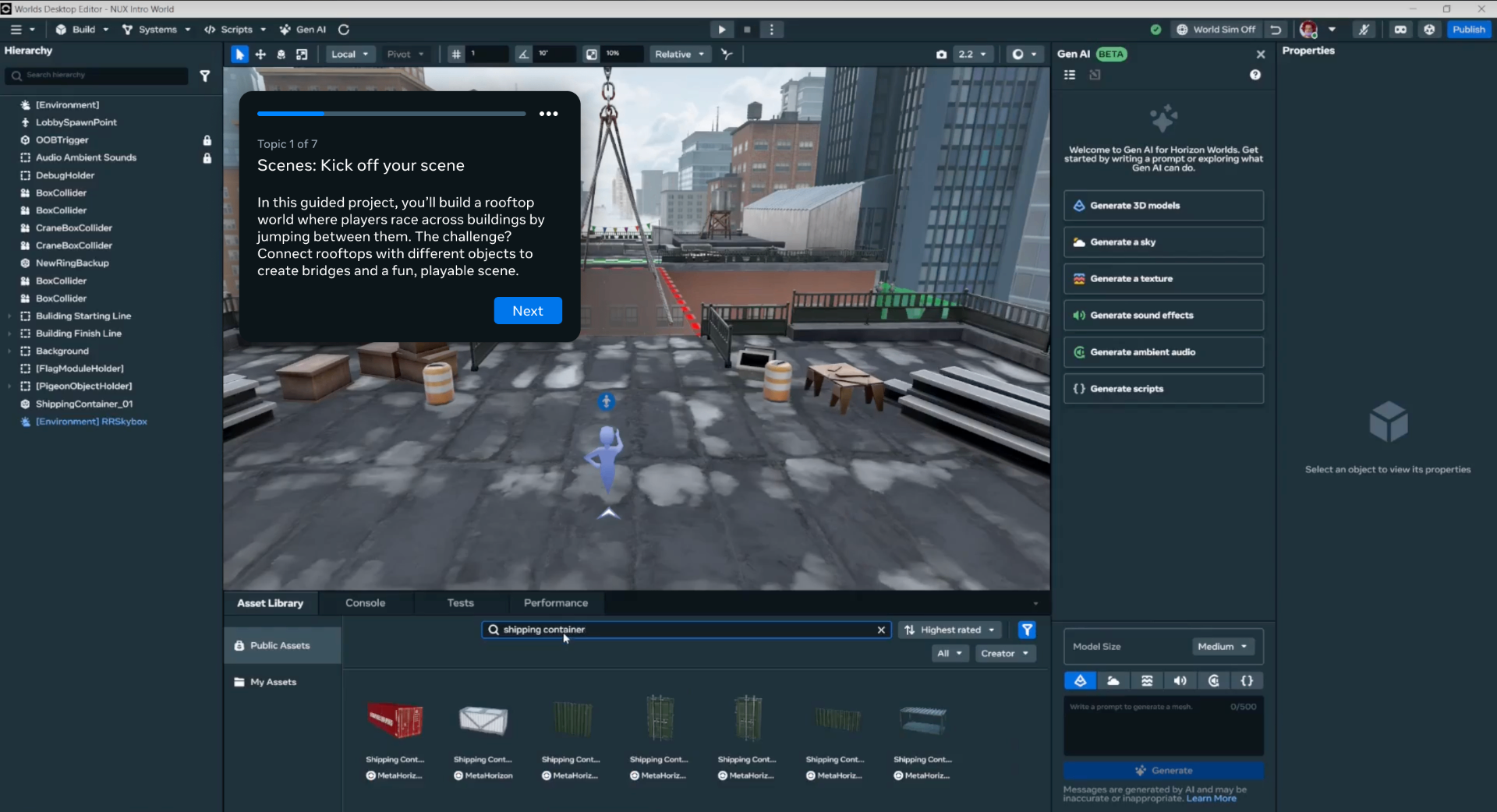
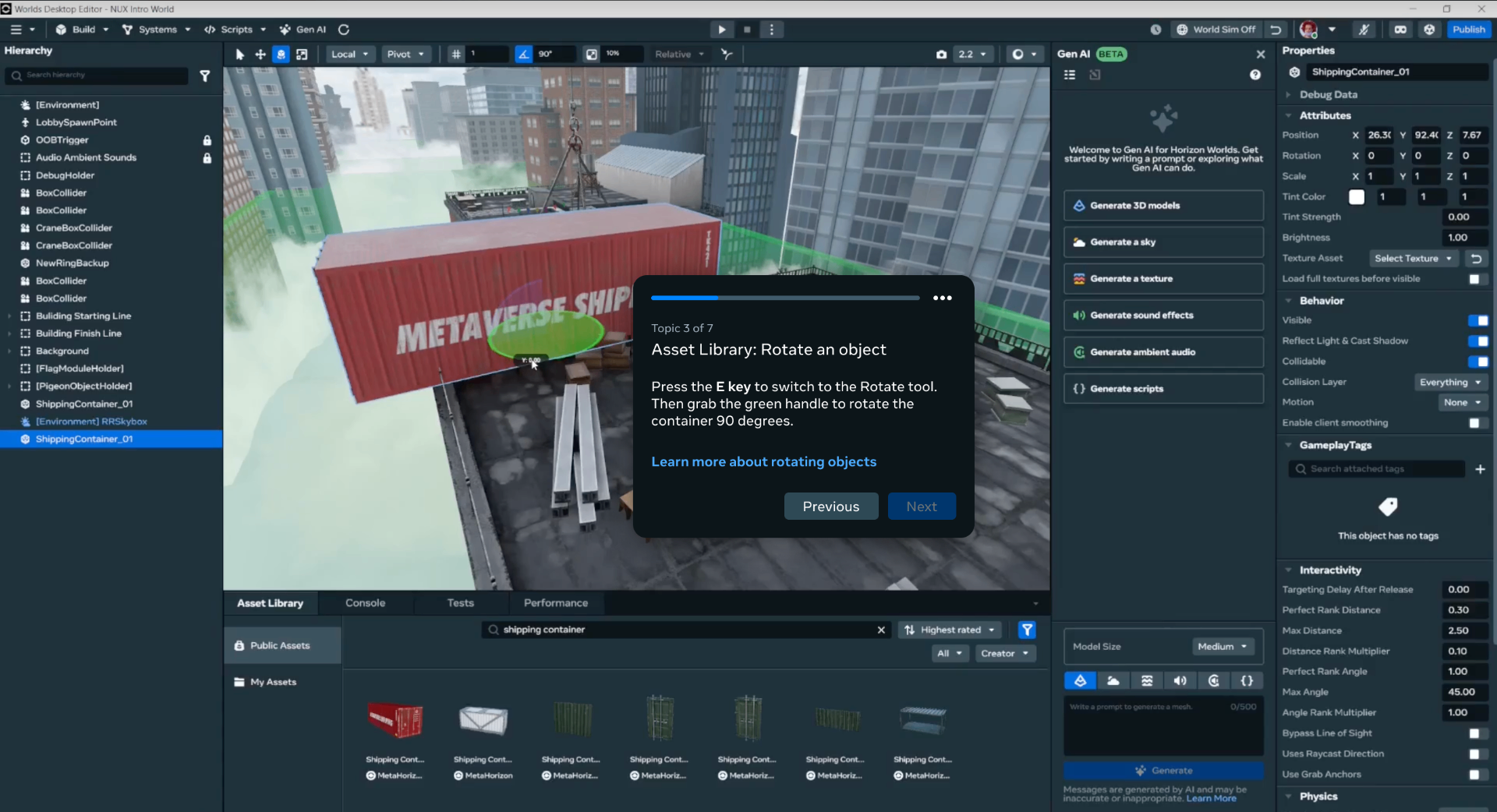
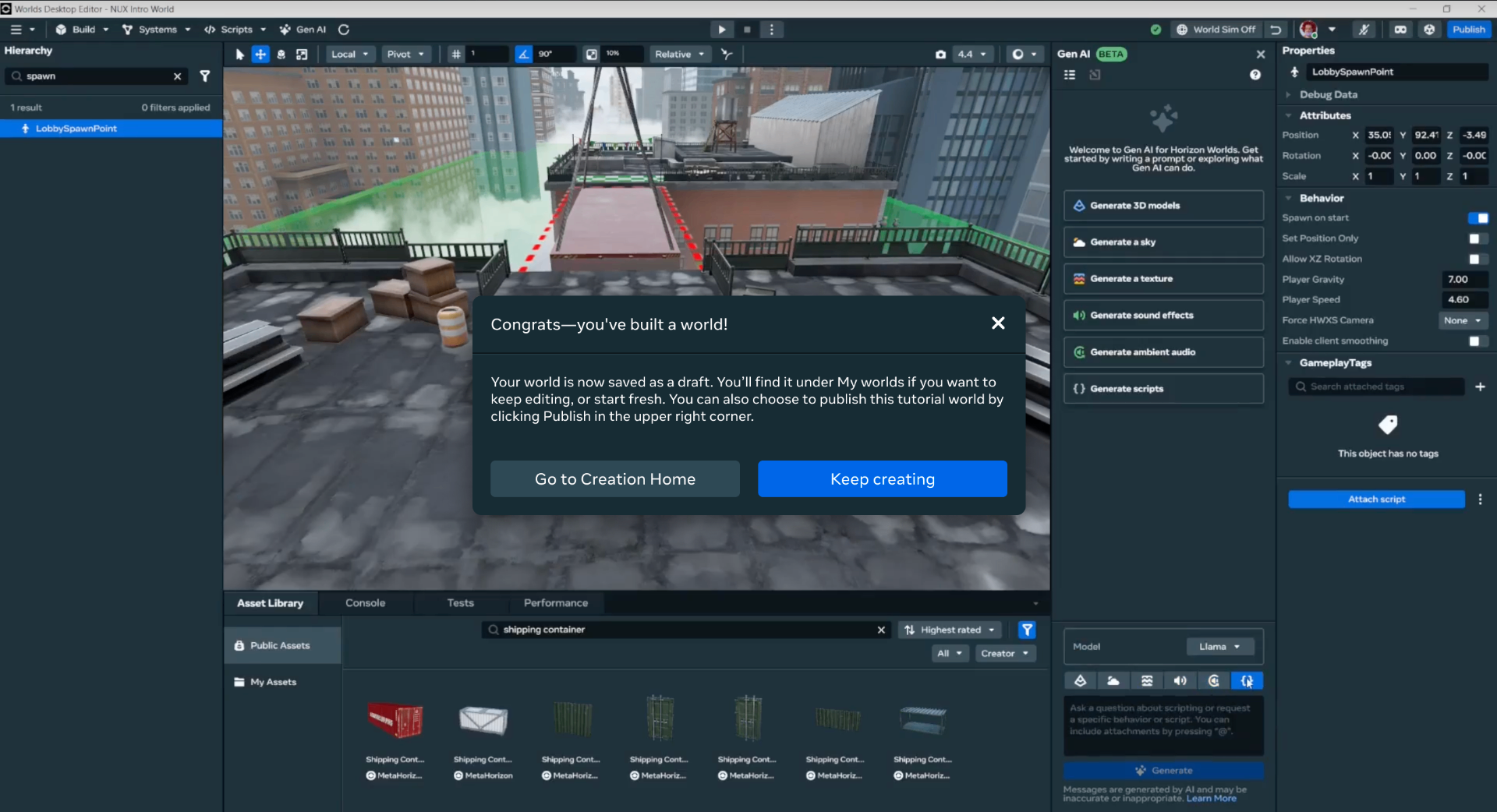
The core tension in designing the NUX was keeping it short enough to not lose people while making it substantive enough to actually matter. Most tutorials teach and then leave. We wanted users to finish the NUX feeling like they had made something real, not just completed a checklist. To solve this, I collaborated with a game designer to build the walkthrough as an actual game tutorial, one that ends with the user having created their own world. By the time someone finishes the NUX, they're not starting from zero. They already have something.
The design
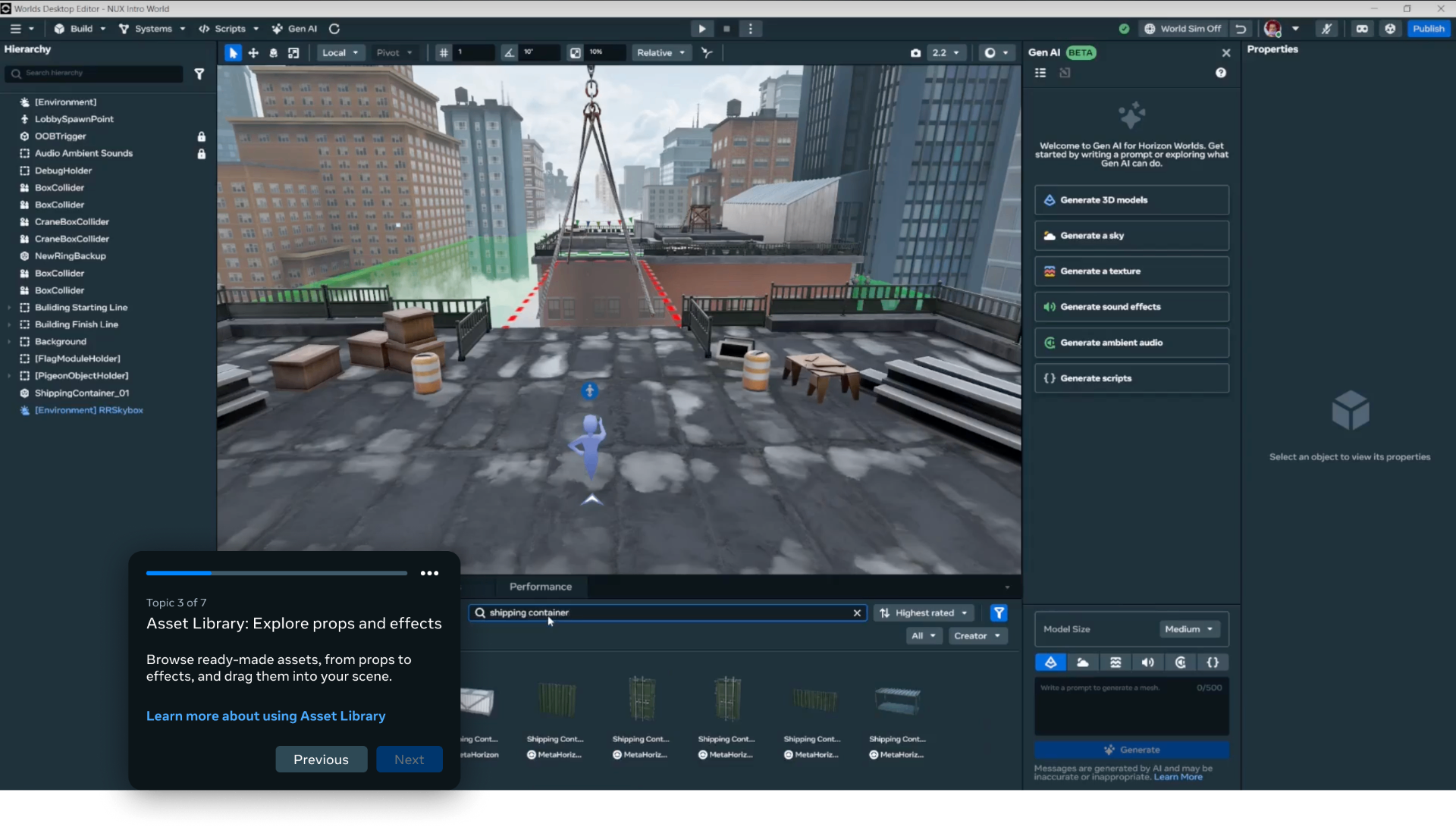
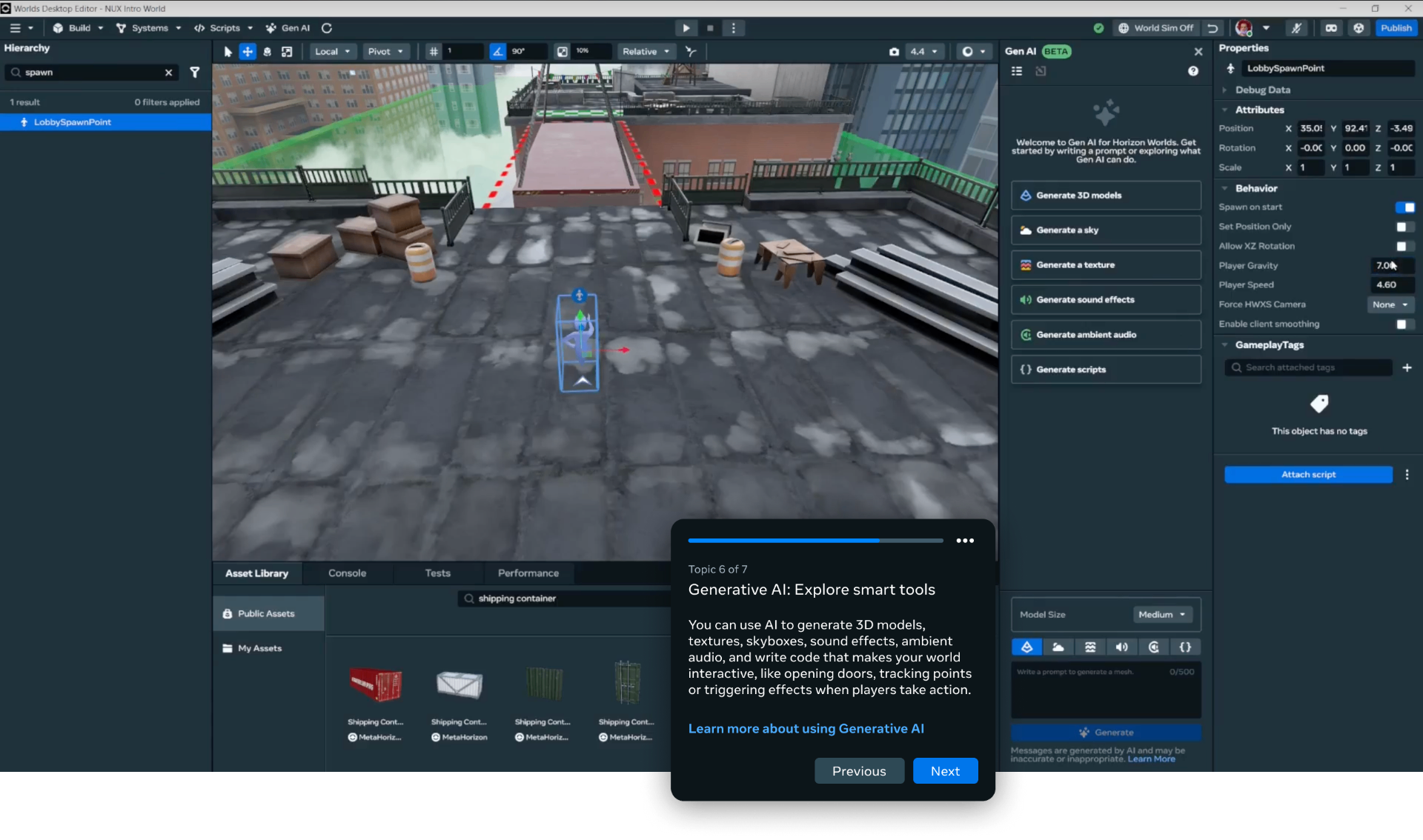
The walkthrough covers three layers. Foundations: mouse, keyboard, and basic navigation for users who had never touched a game engine before. Editor tools: a guided tour of the core toolset and how to build within the editor. AI features: hands-on introduction to the editor's AI capabilities including skybox generation, AI mesh creation from prompts, and TypeScript scripting assistance.
Supporting education layer
Supporting education layer
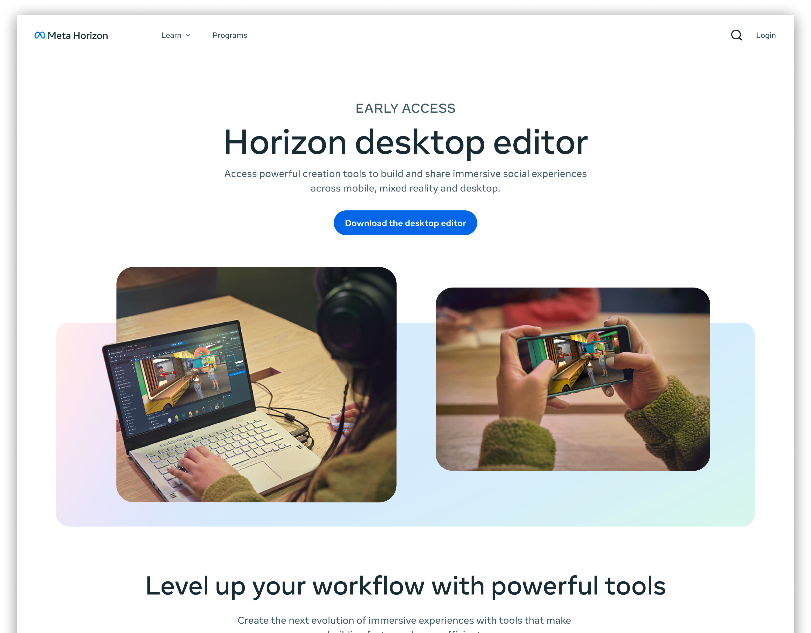
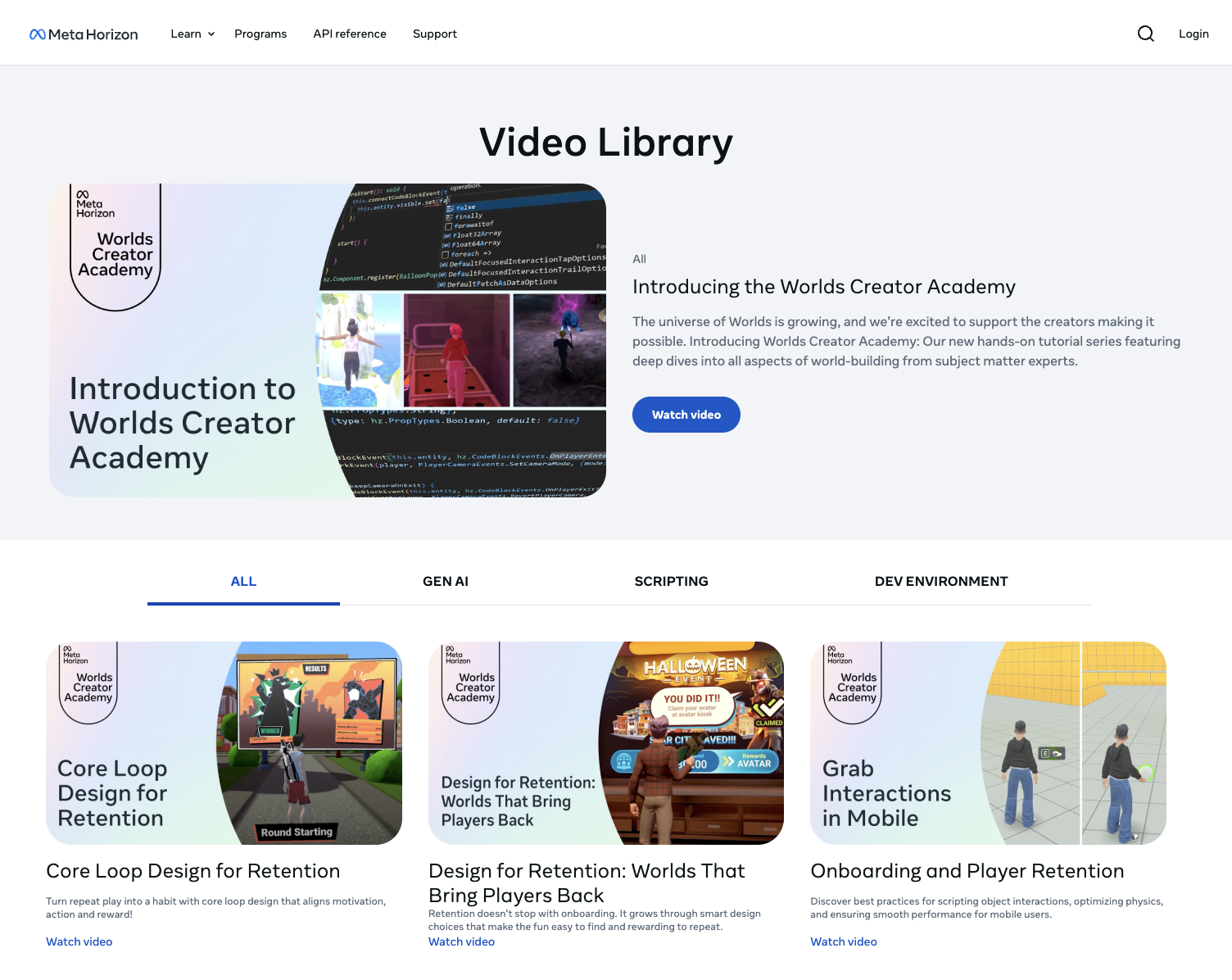
The NUX was one part of a broader education system I helped build. A dedicated Horizon creator website provided additional guidance and resources, and I collaborated on 8 onboarding videos to support creators beyond the in-editor experience.
Outcome
The NUX shipped to 100% of users, a significant milestone for a zero to one feature. By ending with a real world created by the user, the tutorial set a new bar for how the editor onboards creators.
The goal was not to teach the editor. It was to make sure that by the end, you had already built something in it.